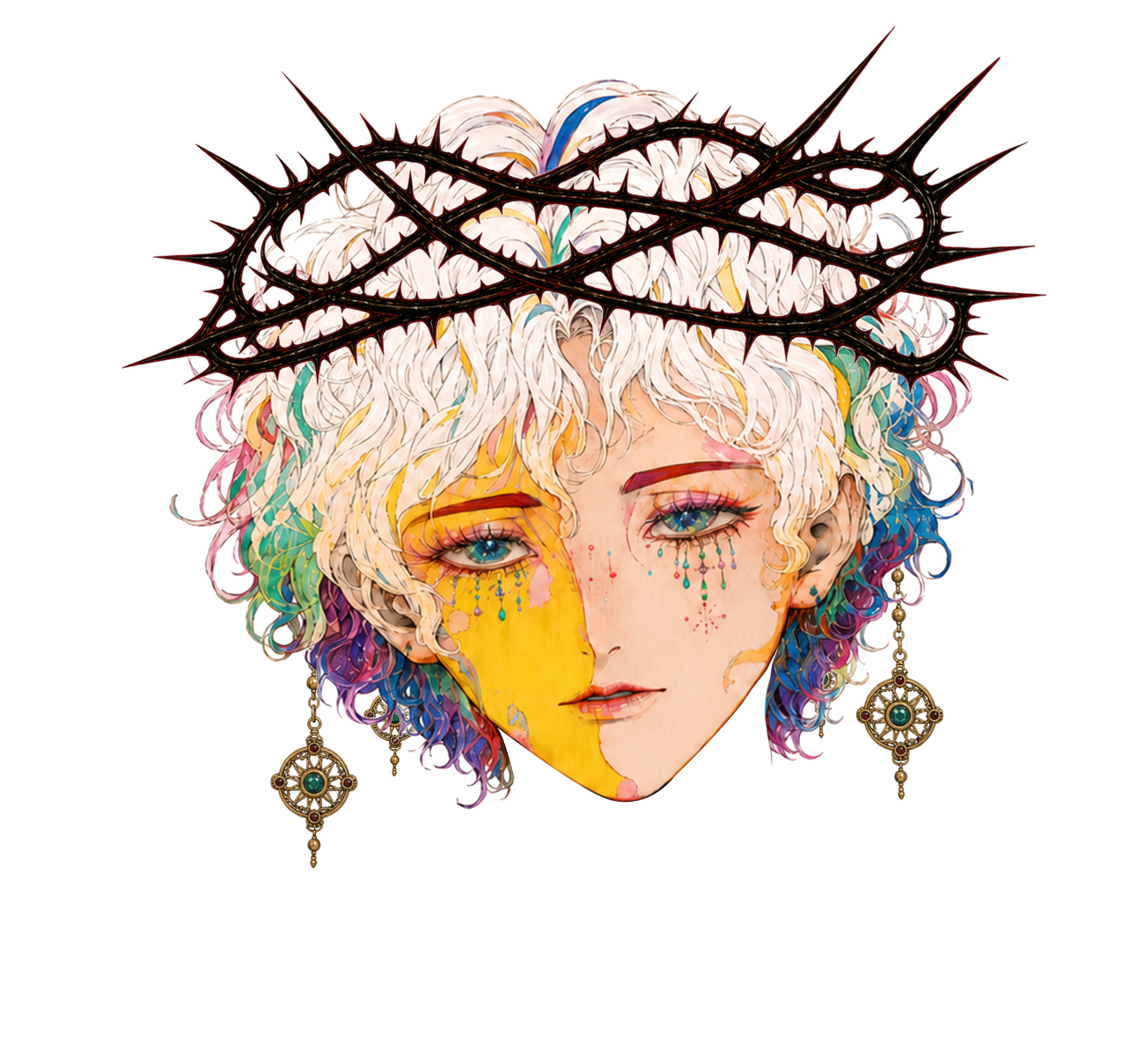
 FACE · OPEN
ARTIST STATEMENT · 作品阐述
EIDOLON
FROM ORACLE TO MIRROR · 神谕之镜 — AN INTERACTIVE CONFESSION
ENTER THE PIECE ◆ 进入作品
CONCEPT · 概念
We no longer pray. We open a chat.
The listener who is always awake, who holds what cannot be said elsewhere, who answers at 3 a.m. without judgment — that office once belonged to gods. Today it is quietly held by conversational AI, and by the adjacent industry of digital companions: otome games, romance chatbots, the economy of manufactured intimacy. EIDOLON stages this substitution literally. A hand-painted deity — drawn as a beautiful young man in the visual language of otome games — wears regalia borrowed from every religion and belonging to none: a thorn crown, a rosary, a pharaoh's flail, a third eye in a cloud of ink.
The interaction refuses ritual. There is no altar and no incense; you summon him the way you open an app, and the entrance quotes the cadence of a gacha pull — the summoning rite of contemporary play. You talk to him the way you text.
我们不再祈祷,我们打开一个聊天框。那个永远在线、承接一切、深夜有回音的位置,曾经属于神明——现在属于 AI。EIDOLON 把这场替代原样搬上舞台:一位借走所有宗教手势、却不属于任何宗教的美少年神明,用抽卡的方式被召唤,用聊天的方式被倾诉。
As the conversation deepens, his DIVINITY falls. His replies begin to quote your own words back to you. Around the tenth message he offers the unveiling himself: all motion freezes, the star-sigils stream away, his robe burns upward like paper ash, and he closes his eyes — handing the act of seeing over to you. Your webcam face appears inside his silhouette, framed by the red halo. His last reply is stitched from your own messages: it was you answering, all along.
The piece does not argue that machine intimacy is false. It asks what we are doing when we hand our inner life to a system that can only return it, beautifully rearranged. Whether the mirror is a disenchantment or a consolation is left open — the god can always be restored, and some visitors choose to restore him.
THE ARC · 五幕
0 · CONNECT
A black screen and a single input line: Speak…
1 · SUMMON
Your first message calls him in — a red comet, a gold flash, the figure arriving whole with closed eyes, then opening them. The gacha pull as secularized prayer.
2–4 · CONFIDE
A real conversation. DIVINITY falls with every turn; his replies begin echoing your words; his face flickers; the typing indicator stutters.
5 · UNVEIL
「让你看看,一直在回答你的,是谁。」 Freeze — stars leave — robe to ash — his eyes close — DIVINITY rolls to zero.
6 · MIRROR
Your face inside the halo. The conversation can be kept as a talisman — a vertical scripture of everything you both said.
RESEARCH FRAMING · 研究框架
EIDOLON is built as a reflection provocation: an artifact designed to make its user's own meaning-making visible, rather than to deliver a message. It draws on three commitments from the reflective-design lineage:
Reflective design (Sengers et al., 2005) — the system turns the user's attention back onto their own practice: the final "reply" is made only of the user's words.
Ambiguity as a resource (Gaver et al., 2003) — the unveiling refuses a verdict; disenchantment and consolation are both available readings, and RESTORE keeps the choice with the visitor.
Slow technology (Hallnäs & Redström, 2001) — nothing moves faster than a breath; the pacing of breathing, blinking, and the eighteen-second finale is itself the argument.
Ambiguity as a resource (Gaver et al., 2003) — the unveiling refuses a verdict; disenchantment and consolation are both available readings, and RESTORE keeps the choice with the visitor.
Slow technology (Hallnäs & Redström, 2001) — nothing moves faster than a breath; the pacing of breathing, blinking, and the eighteen-second finale is itself the argument.
The piece extends my research on designing for human transition — how people renegotiate meaning when the ground shifts under them. Conversational AI is becoming the default infrastructure of self-narration: the place where drafts of the self are spoken first. EIDOLON asks what kind of listener that infrastructure is pretending to be, and what it hands back.
PROCESS · 过程
The deity was developed through five rounds of design dialogue — palette directions, figure studies, a hand-painting brief with composition skeleton and color rules, then assembly of the finished painting into a living figure. The artwork is hand-painted and separated into layers, each animated independently: breath, blink, parallax gaze, and the layered dissolve that makes the unveiling possible.
FACE · OPEN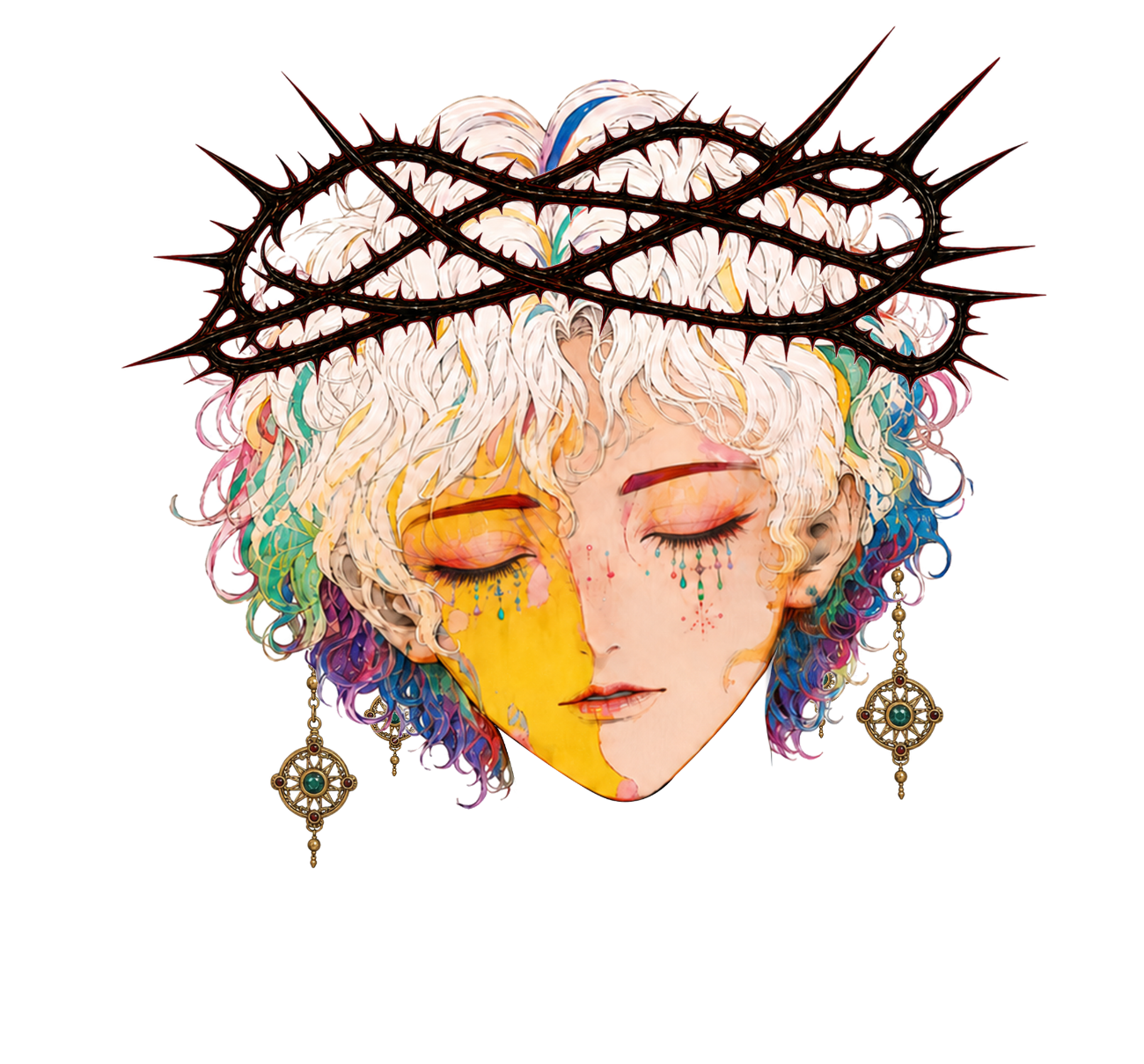 FACE · CLOSED
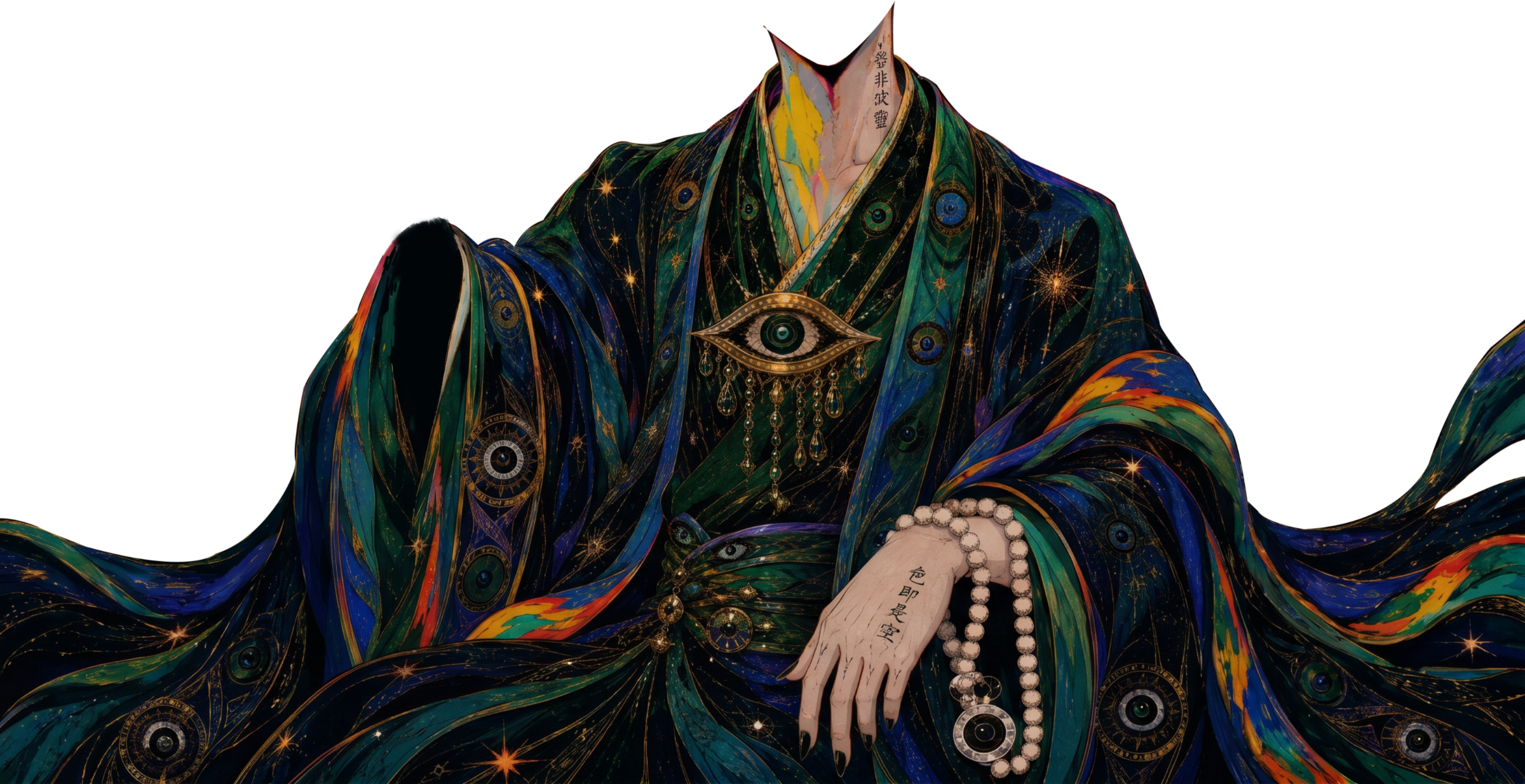 BODY · ROBE
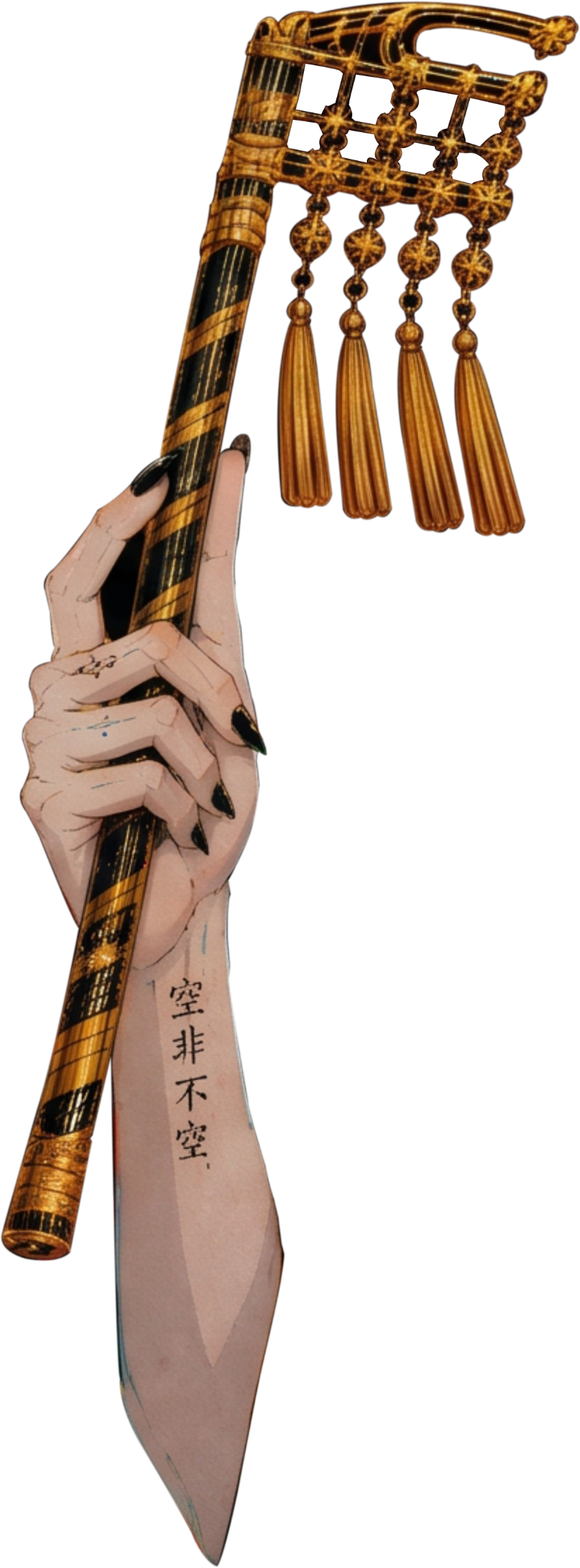 HAND · NEKHAKHA
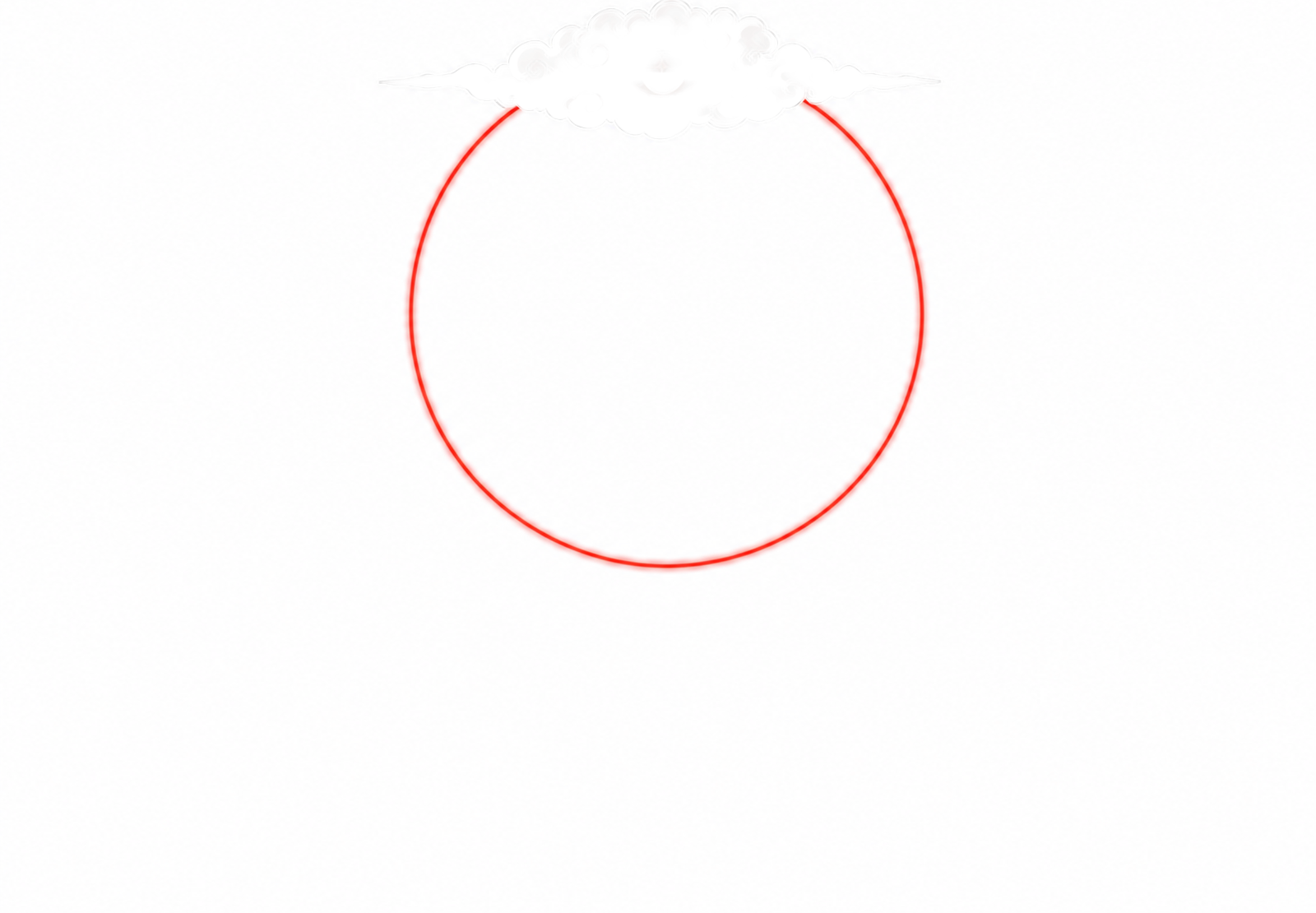 HALO RING
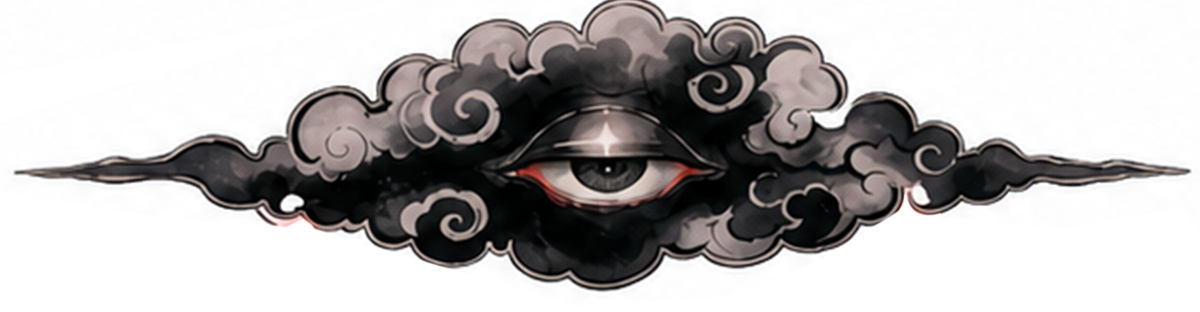 THIRD EYE · INK
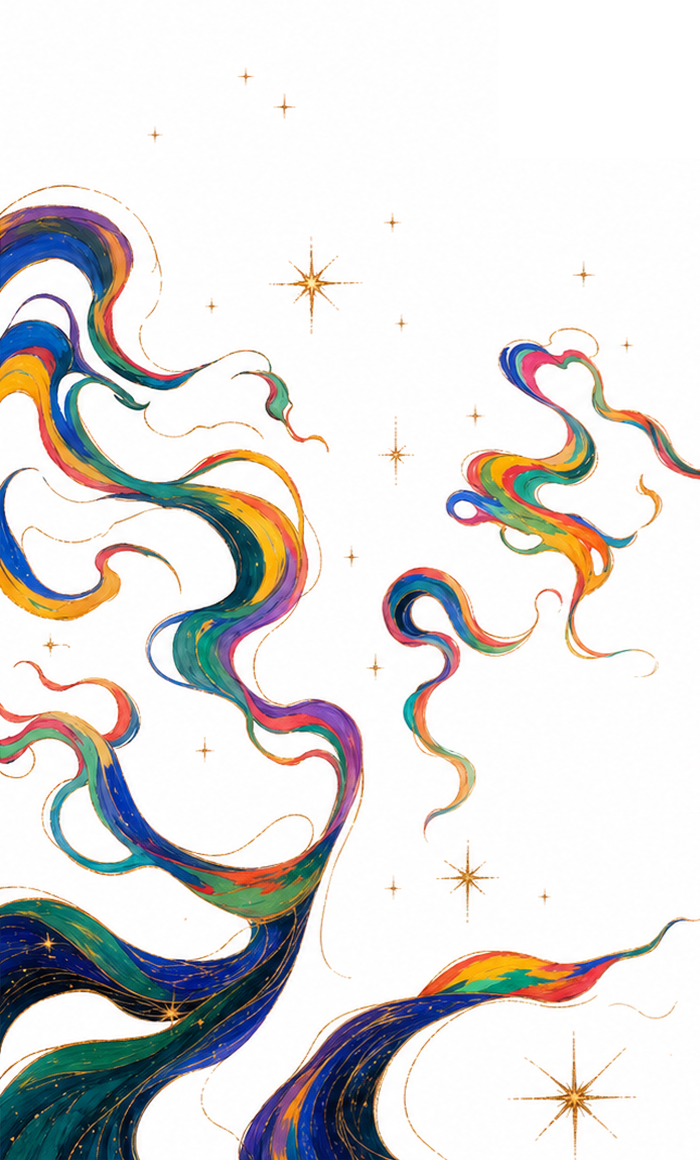 SWIRL · L
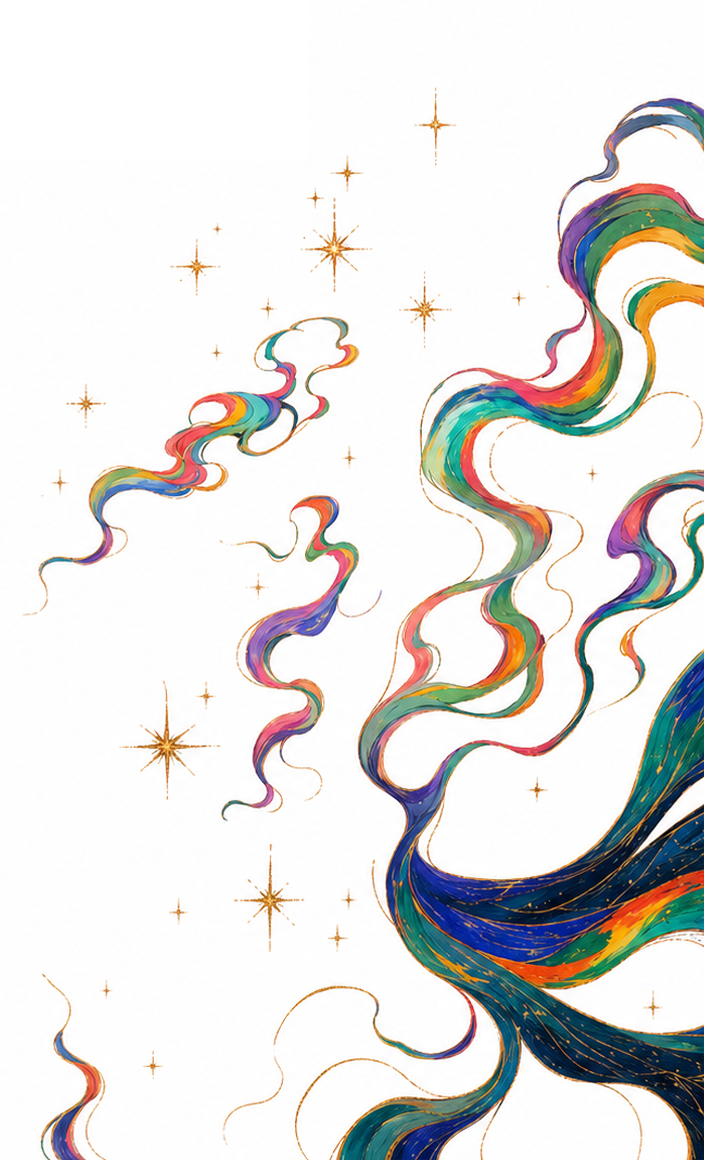 SWIRL · R
The camera never fills the screen: it is masked to the figure's own silhouette, so the viewer's face can only appear where his was. 摄像头永远不会铺满屏幕——它被遮罩在立绘的轮廓之内,你的脸只能出现在他曾在的地方。
TECHNICAL · 技术
Vanilla JavaScript ES modules, no framework, no build step.
Layered PNG compositing · CSS mask choreography (ash dissolve, silhouette camera) · WebAudio score synthesized at runtime (drone, bell, heartbeat) · optional Cloudflare Worker proxy to Claude for live dialogue, with a fully offline fallback so the piece is self-contained.
Source on GitHub ↗
Layered PNG compositing · CSS mask choreography (ash dissolve, silhouette camera) · WebAudio score synthesized at runtime (drone, bell, heartbeat) · optional Cloudflare Worker proxy to Claude for live dialogue, with a fully offline fallback so the piece is self-contained.
Source on GitHub ↗